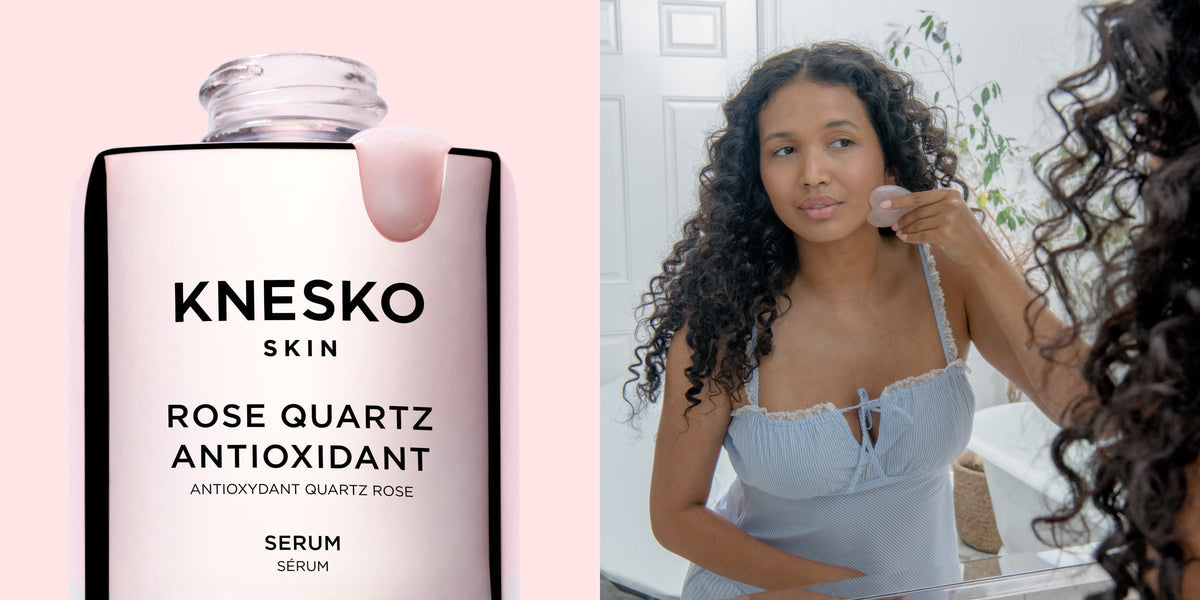
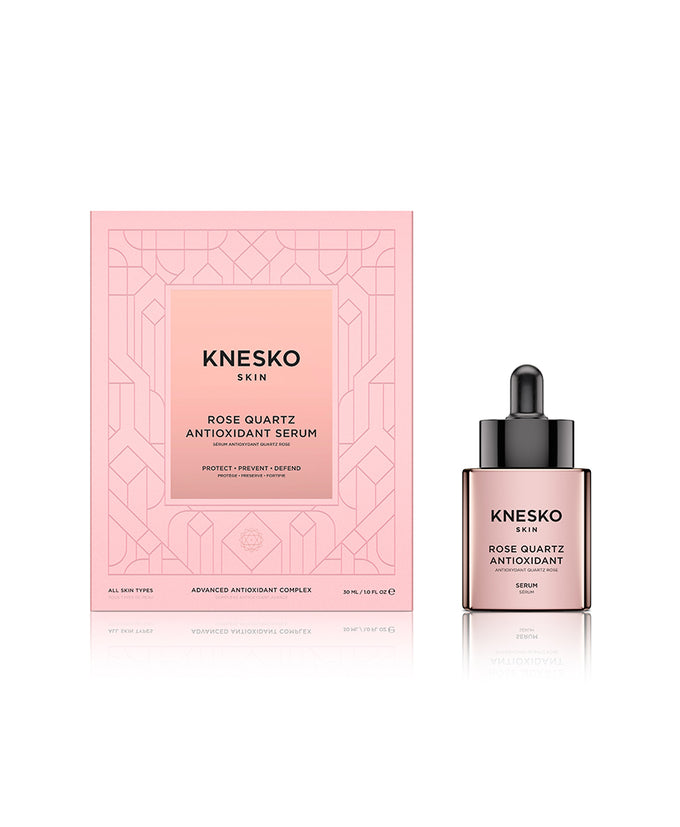
Skincare experts agree that vitamin C serum is best used in the morning because this antioxidant helps protect skin from free radical damage and environmental stressors throughout the day. By applying a product like the KNESKO Rose Quartz Antioxidant Serum in the morning—which is made with the highest quality vitamin C—you’re essentially creating a defense shield for your skin. Some scientific studies have even shown that using vitamin C with sunscreen helps the two ingredients work more synergistically.[1] In other words, they’re a double-duty team that thrives when used in the morning together.
Can you use vitamin C serum at night instead of in the morning?
Yes, you can use vitamin C at night. A review in the Journal of Clinical and Aesthetic Dermatology states that topical vitamin C not only acts as a powerful antioxidant in the skin, but also has an anti-aging effect by increasing collagen synthesis.[2] The study concluded it can help with stabilizing collagen fibers and decreasing collagen loss, all of which support skin structure and help reduce signs of aging.
That said, experts widely agree that vitamin C delivers its greatest benefit in the morning, when it can help neutralize free radicals caused by UV exposure and pollution, especially when layered under sunscreen.
Related: This Form of Vitamin C is one of the Best for Brightening Skin
Can you use vitamin C serum both morning and night?
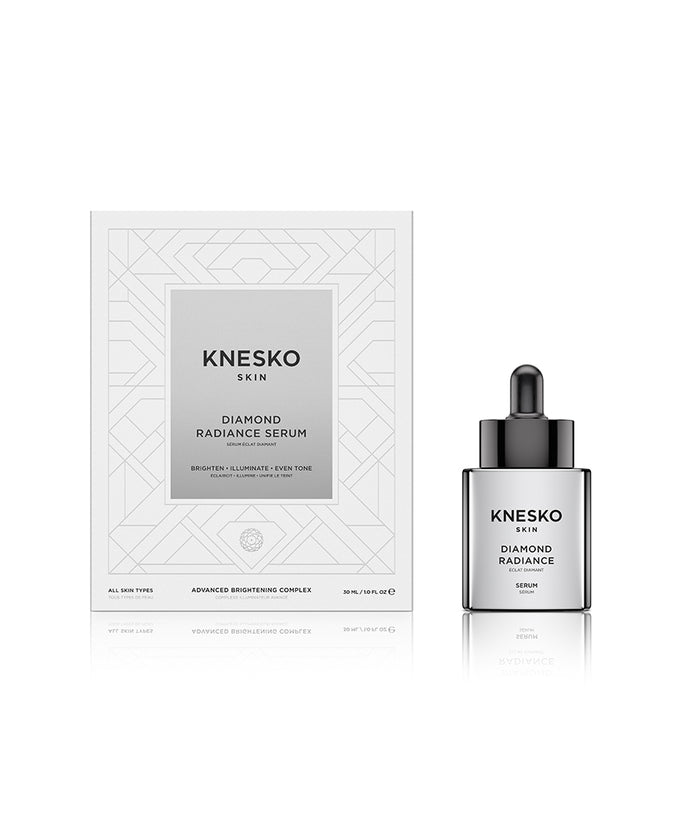
You can sometimes apply a vitamin C serum both in the evening and in the morning depending on the formula and your skin’s tolerance. Dermatologists note that vitamin C is safe for twice-daily use, especially in well-formulated, stabilized serums like the Diamond Radiance Serum. In the morning, it helps protect against free radicals from UV exposure and pollution, while at night it supports collagen synthesis and skin repair. If your skin is sensitive, once daily is usually enough.
Should vitamin C serum be applied before or after moisturizer?
Vitamin C serum is applied before moisturizer. Follow the rule of layering when applying skincare products, which says to apply your skincare products in order from thinnest (like essences and toners) to thickest (like oils and face creams). This order allows the lightweight, active ingredients in vitamin C to absorb fully into the skin before being sealed in by moisturizer, helping the serum work more effectively.
Should you use vitamin C serum before sunscreen?
Always apply vitamin C serum before your sunscreen. This does three things. First, it follows the correct skincare layering order so the vitamin C actives are absorbed by your skin and so products layer nicely. Second, sunscreen is always the final product you apply (before makeup) because it needs to form an even, uninterrupted protective film on the surface of the skin to effectively shield against UV rays. Third, the sunscreen protects the vitamin C from oxidizing and degrading on your skin, per the The Dermatology Institute of Boston.[3]
Can you layer vitamin C with other serums?
You can layer vitamin C with other serums—and it’s a great way to double on your routine—but there are some skincare rules to follow. Compatibility and order matter. Vitamin C layers well with hydrating and barrier-supporting ingredients such as hyaluronic acid, peptides, and niacinamide, especially in scientifically formulated serums. To avoid irritation, apply vitamin C first on clean skin, then follow with gentler, supportive serums. Strong exfoliating acids or retinoids are best used at a different time of day—or alternated daily with vitamin C—particularly if you have sensitive skin.
Does vitamin C make your skin more sensitive to the sun?
Vitamin C does not make your skin more sensitive to the sun, and in fact it may help protect against sun-induced oxidative damage. This is a common myth, and we’re debunking it! The truth is that vitamin C is a powerful antioxidant that neutralizes free radicals generated by UV exposure, which can help reduce photoaging and protect skin at the cellular level. It does not act like exfoliating acids (such as AHAs) that can increase photosensitivity, nor does it absorb UV light like sunscreen does. Rather, it supports your skin’s defense when used with SPF.
Is it better to use vitamin C daily or a few times a week?
Most skin experts recommend using a topical vitamin C serum daily, in the morning, for the best results. Daily use helps maintain a consistent level of antioxidant protection against environmental stressors and supports ongoing benefits like evening skin tone (hello, glow!) and promoting collagen production, per Harvard Health.[4] Some people start by applying it every other day to build tolerance and then progress to daily use once their skin adjusts. This is a good approach to take if you have sensitive skin.
Also, here’s a little skincare pro tip: you should not have any vitamin C serum left after three months. The goal is to use every drop before the formula starts degrading. While high-quality vitamin C serums are formulated to remain potent, vitamin C is inherently unstable and can oxidize over time once exposed to air, light, and heat. Regular use is the key to getting the full benefit from the formula.
How long does it take to see results from vitamin C serum?
Many people start seeing results from consistent vitamin C serum within two to four weeks, with more noticeable improvements appearing after eight to 12 weeks of consistent use. In the short term, vitamin C helps brighten the complexion and boost radiance by neutralizing oxidative stress that dulls skin. With continued use, it supports collagen production, which can help soften the look of fine lines and improve skin firmness over time.
Vitamin C also helps fade the look of dark spots and post-acne marks by inhibiting excess melanin production, leading to a more even skin tone. Additionally, its antioxidant properties help protect skin from environmental damage, especially when used daily and paired with sunscreen.
In a nutshell (or should we say, in an orange peel?), vitamin C is a true skincare overachiever in your routine, working in the background to keep skin resilient, radiant, and protected. Stick with it, and the payoff is skin that looks brighter, smoother, and more even with time.
Sources:
1. Darr D, Dunston S, Faust H, Pinnell S. Effectiveness of antioxidants (Vitamin c and e) with and without sunscreens as topical photoprotectants. Acta Derm Venereol. 1996;76(4):264-268. doi:10.2340/0001555576264268
2. Al-Niaimi F, Chiang NYZ. Topical vitamin c and the skin: mechanisms of action and clinical applications. J Clin Aesthet Dermatol. 2017;10(7):14-17.
3. Riddle R. Vitamin c: the benefits & how to incorporate it into your routine. The Dermatology of Institute of Boston. April 21, 2023. Accessed January 8, 2026. https://www.dermboston.com/uncategorized/vitamin-c-in-skin-care-the-benefits-and-how-to-incorporate-it-into-your-routine/
4. MSHS NN MD, MD PP. Why is topical vitamin C important for skin health? Harvard Health. November 10, 2021. Accessed January 8, 2026. https://www.health.harvard.edu/blog/why-is-topical-vitamin-c-important-for-skin-health-202111102635